Hardware development leaves no room for guesswork. When you design a mechanical assembly or an electronic enclosure, the physical components dictate product failure or success. You need tight tolerances, specific material properties, and repeatable processes. That is exactly what professional plastic machining services deliver.
At Precintl, our custom plastic parts manufacturing operations support OEM and ODM clients worldwide. We cut, mill, and turn polymers into high-performance components. Rather than forcing you into immediate high-capital molding setups, CNC plastic machining gives you the freedom to test, iterate, and manufacture with precise control.
What Are Plastic Machining Services?
Engineers specify plastic machining services when they require tight geometric control over polymer materials. This process removes material from a solid block or rod of plastic to form a final shape. We use computer numerical control (CNC) equipment to execute these subtraction paths with CNC machining extreme accuracy.
How CNC Machining Produces Custom Plastic Parts
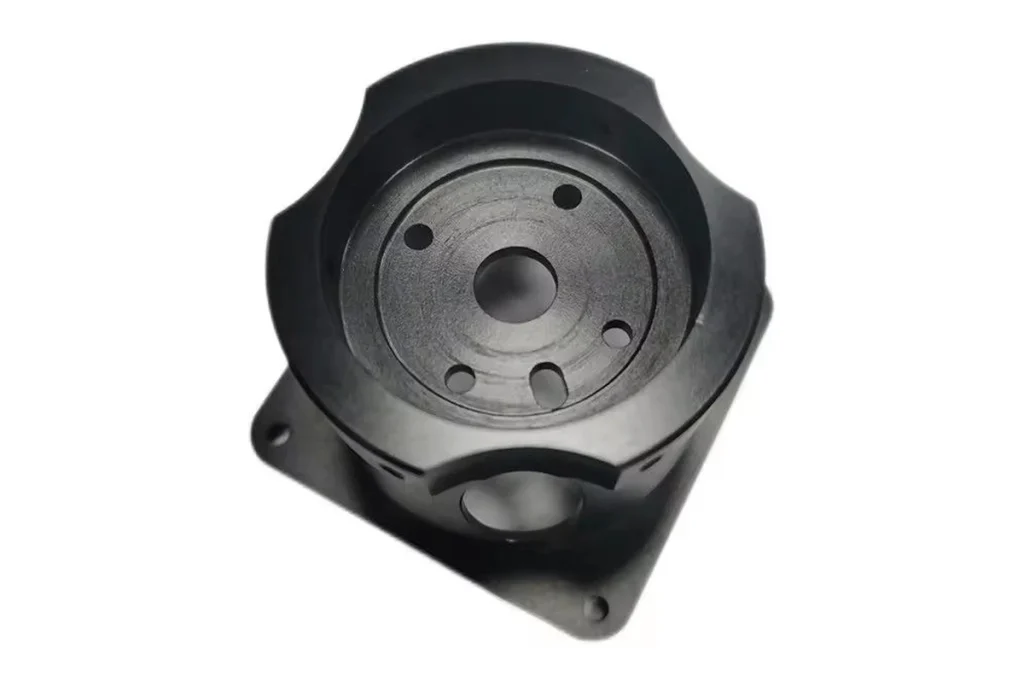
The process starts with your 3D CAD model. Our engineers translate this model into G-code, the language that controls the machine tools. The equipment then drives high-speed cutting tools across X, Y, and Z axes—sometimes adding rotational axes—to carve away raw material. This yields custom CNC plastic parts with dimensions matching your exact specifications.
Because we do not use molds, you pay zero tooling costs upfront. You can modify your CAD file between batches, run functional tests on actual production-grade materials, and transition directly into larger runs without delay.
Plastic Machining vs. Plastic Injection Molding
Many product developers face a choice between machining and molding. Your production volume and timeline should dictate the decision.
| Feature | Plastic Machining | Injection Molding |
| Upfront Tooling Cost | Zero | High (requires metal mold creation) |
| Lead Time | Days | Weeks to months |
| Volume Sweet Spot | 1 to 5,000 units | 10,000+ units |
| Design Changes | Fast and free (just update CAD) | Expensive (requires mold modification) |
| Tolerances | Exceptionally tight (up to ±0.01mm) | Subject to shrinkage and warpage |
Custom Plastic Machining Services We Provide
Precintl runs a facility equipped to handle every stage of your hardware development. Our custom plastic machining capabilities scale to meet the complexity of your specific geometry.
CNC Plastic Milling
We secure a solid block of plastic on a machine bed while rotating cutting tools sheer away material. CNC plastic milling works best for flat, asymmetrical, or complex 3D shapes like custom enclosures and structural brackets. Through plastic CNC milling, we hold sharp internal corners, drill precise hole patterns, and create thin-walled features that would warp in a mold.
CNC Plastic Turning
When your design requires cylindrical or symmetrical shapes—such as shafts, spacers, or custom bushings—we use CNC plastic turning. The machine spins the plastic rod at high speeds while a stationary cutting tool shapes the exterior and interior profiles. For complex geometries, plastic CNC turning centers equipped with live tooling can mill flats and cross-holes in the same operation.
Precision & Multi-Axis Plastic Machining
Basic parts require basic machines. Complex OEM designs demand advanced equipment. We utilize 5 axis plastic machining to manufacture parts with intricate undercuts and off-angle features without manually repositioning the workpiece. For standard structural components, our 3 axis CNC plastic machining centers provide fast, reliable output. This tier of precision CNC machining plastic ensures your multi-part assemblies fit together perfectly.
Plastic Prototyping and Low-Volume Production
Validating a physical product requires testing it in real-world conditions. We handle plastic prototype machining so you can hold your design, test its fitment, and verify its mechanical performance. When you move past the prototype stage, we transition seamlessly into low volume plastic machining to support your initial market launch or beta testing phases.
Related: Product Prototyping: Complete Guide to Developing and Manufacturing a Product
Plastic Materials for CNC Machining
Metals behave predictably under a cutting tool. Plastics do not. Different polymers melt, chip, or warp if you apply the wrong spindle speed or feed rate. Proper plastic material selection guarantees your part performs its intended function in the field.
PEEK, POM (Delrin) and Nylon
High-performance engineering applications rely on strict material requirements.
- PEEK: When you need extreme temperature resistance and chemical stability, we use CNC PEEK machining. PEEK machining produces components for medical devices and aerospace applications where failure means disaster.
- POM / Delrin: Known for high stiffness and low friction, Delrin machining (also referred to broadly as POM machining) is our standard choice for gears, bearings, and snap-fit joints.
- Nylon: For parts requiring high wear resistance and toughness, CNC nylon machining delivers. Keep in mind that nylon machining requires compensation for moisture absorption, which our engineers factor into the toolpaths.
PTFE, UHMW-PE and Polypropylene
When friction and chemical exposure dictate the design, we shift to specialized polymers.
- PTFE: Valued for its near-zero friction coefficient. PTFE machining and CNC PTFE machining require sharp, specialized cutters to prevent material deformation.
- UHMW-PE: UHMW plastic machining yields parts that withstand severe impact and abrasion, frequently used in industrial guide rails and wear pads.
- Polypropylene: Polypropylene machining provides excellent chemical resistance and fatigue strength, making it ideal for living hinges and fluid-handling components.
ABS, Polycarbonate and Acrylic
Consumer electronics and visible components often utilize these standard thermoplastics.
- ABS: ABS plastic machining is the backbone of hardware prototyping due to its excellent impact resistance and paintability.
- Polycarbonate: Polycarbonate machining delivers parts with massive impact strength and transparency, used heavily in protective covers.
- Acrylic: When optical clarity ranks above impact strength, acrylic machining provides glass-like finishes for light pipes and display lenses.
How to Choose the Right Plastic Material
Do not guess your material. Look at your operating environment. Does the part face continuous UV exposure? Will it experience high friction? For heavy-duty mechanical loads, engineering plastic machining utilizing materials like POM or PEEK outperforms standard ABS. If you need inexpensive, rigid components for structural mockups, HDPE machining keeps costs low while providing good machinability. We stock a vast inventory of engineering plastics to match your exact application.
Custom Plastic Parts We Manufacture
Our plastic parts manufacturing lines support diverse industries. We do not just cut plastic; we manufacture functional components that drive your OEM and ODM products.
Precision Plastic Components
From micro-fluidic manifolds to optical mounts, machined plastic components require absolute dimensional control. We operate climate-controlled facilities to ensure temperature fluctuations do not cause thermal expansion during the machining cycle.
Enclosures, Housings and Covers
Consumer electronics and IoT devices need protective shells. We handle plastic component manufacturing for complex housings featuring threaded inserts, overlapping seams, and integrated display windows. These components are useful in products ranging from smart home devices and wearable technology to smart pet products and other consumer electronics.
Gears, Bushings, Spacers and Mechanical Parts
Moving parts generate friction and heat. We machine tight-tolerance gears and mechanical linkages from self-lubricating materials like Delrin and PTFE to ensure your mechanical assemblies operate quietly and reliably.
Electronic, Industrial and IoT Components
Sensors need mounting brackets, and PCBs need standoff hardware. We manufacture custom plastic parts that isolate electrical currents, withstand industrial chemicals, and protect delicate internal electronics. These components support the development of IoT products, electronic devices, and connected products, where proper PCB design and component integration are essential.
Plastic Machining Tolerances & Surface Finishes
A CNC machine only does what the programmer tells it to do. Achieving high accuracy requires deep knowledge of polymer behavior under mechanical stress.
CNC Plastic Machining Accuracy and Tolerances
Standard metal machining tolerances do not automatically apply to plastics. However, we consistently achieve tight tolerance plastic machining through optimized toolpaths and sharp carbide tooling. Standard plastic machining tolerances sit around ±0.1mm, but our advanced CNC plastic machining tolerances can hit ±0.01mm for rigid engineering plastics like Delrin and PEEK.
Surface Finish Options for Machined Plastic Parts
The cutting tool leaves microscopic marks on the raw material. Your plastic machining surface finish depends on the part’s end-use. We offer standard “as-machined” finishes for internal mechanical parts to keep costs down. For cosmetic parts, we provide bead blasting, sanding, vapor polishing for clear acrylic/polycarbonate, and custom painting.
Factors That Affect Plastic Machining Precision
Heat destroys plastic machining accuracy. As the tool cuts, it generates friction. If the spindle spins too fast, the plastic melts rather than chips, ruining the dimensional integrity. We control cutting speeds, apply specialized air or liquid coolants, and manage tool sharpness to guarantee precision.
Plastic Machining Design & DFM Considerations
Great manufacturing starts with great design. Flawed CAD models result in expensive, failing parts. We run a rigorous Design for Manufacturability (DFM) review on every project.
Wall Thickness, Holes and Feature Geometry
Follow established plastic machining design guidelines to reduce your costs. Keep wall thicknesses above 1.5mm to prevent vibration and chatter during the cutting process. Standardize your hole sizes to match standard drill bits. Avoid designing deep pockets with sharp internal corners; spinning end-mills are round and naturally leave a radius.
Avoiding Deformation, Heat and Material Stress
Removing large volumes of plastic from a single side of a block releases internal material stress, causing the part to bow. DFM for plastic machining requires balancing the material removal. We flip the part during machining to relieve stress evenly, keeping your final component flat and true.
CAD Files, Drawings and Tolerance Requirements
Send us your 3D STEP or IGES files alongside 2D PDF drawings. 3D models dictate the geometry, but 2D drawings dictate your tolerance requirements, threaded hole specifications, and critical-to-function dimensions. Contact our engineering team to discuss your custom plastic machining requirements.
Plastic Machining for Prototypes to Mass Production
Hardware startups and established OEMs trust Precintl because we scale alongside their product lifecycle. We eliminate the friction of switching vendors between prototyping and production.
Rapid Plastic Prototyping
When you design a new product, you need to hold it immediately. We specialize in CNC plastic prototyping, delivering functional models in days. Unlike 3D printing, plastic machining for prototypes uses the actual production-grade polymer, giving you accurate data on mechanical strength and weight.
Low-Volume and Pilot Production
Before investing tens of thousands of dollars into injection molds, run a pilot batch. We manufacture plastic machining prototypes in batches of 50 to 500 units. You can send these machined parts out for beta testing, regulatory certification, and early customer adoption.
Scaling Custom Plastic Parts for Mass Production
When demand spikes, we transition your project into plastic production machining. We optimize the CNC programs, utilize multi-pallet machining centers, and leverage automated material loading to drive down the per-unit cost on high-volume runs.
Quality Control for Machined Plastic Parts
A dimension on a blueprint means nothing if the manufacturer cannot verify it. We treat quality control as a mandatory engineering discipline, not an afterthought.
Dimensional Inspection and Tolerance Verification
Our inspection lab uses Coordinate Measuring Machines (CMM), optical comparators, and calibrated micrometers to verify every critical dimension. We measure the custom CNC plastic parts against your 2D drawings to guarantee the final geometry matches your engineering requirements.
Material and Functional Testing
We do not accept substitute materials. We verify raw material certificates upon arrival. For high-stakes applications, we conduct functional fit checks, thread gauge verification, and surface roughness (Ra) testing to ensure the parts perform as specified.
Quality Documentation and Production Traceability
Medical, automotive, and aerospace OEM clients require strict documentation. We provide First Article Inspection (FAI) reports, material certifications, and full production traceability. If a part fails in the field five years from now, our plastic machining manufacturer records will show exactly when it was cut and what material batch we used.
Plastic Machining Applications
If a product requires precise, lightweight, non-conductive, or chemically resistant components, our plastic machining service delivers the hardware. We cover a broad spectrum of plastic machining applications.
Consumer Electronics and Smart Devices
Wearables, smart home hubs, and custom audio equipment require sleek, durable housings. We machine custom plastic parts for electronics that accommodate PCBs, batteries, and touch interfaces perfectly.
Industrial Equipment and Machinery
Factory floors destroy fragile components. We supply heavy-duty machined parts like UHMW-PE guide rails, Delrin pulleys, and Nylon gears that withstand continuous industrial abuse.
Medical and Laboratory Equipment
Medical devices demand biocompatibility and sterilization resistance. We machine PEEK and Polycarbonate components for surgical instruments, fluid manifolds, and diagnostic equipment housings.
Automotive, Robotics and IoT Products
Autonomous vehicles and robotics rely on lightweighting to extend battery life. We cut custom plastic parts manufacturing weight significantly while retaining the structural rigidity required for sensor mounts and robotic end-effectors.
How Much Do Plastic Machining Services Cost?
Pricing is never arbitrary. The cost to manufacture your parts stems directly from your design decisions, material choices, and requested volumes. Understanding the plastic machining cost structure helps you engineer more profitable products.
Key Factors Affecting CNC Plastic Part Costs
Every second a CNC machine runs costs money. Complex toolpaths, multiple part setups, and slow feed rates drive up the price. If your part requires 5-axis machining or intricate 3D surfacing, expect a higher quote than a simple 3-axis flat bracket.
Material, Geometry, Tolerances and Quantity
Raw material costs vary wildly. Basic ABS costs a fraction of high-performance PEEK. Tight tolerances require slower cutting speeds and frequent tool changes, which increases machine time. As you increase the production quantity, the initial programming and setup costs spread across more units, lowering your individual part price.
How to Reduce Plastic Machining Costs
You control your costs during the CAD phase. Open up tolerances wherever possible; do not request ±0.02mm on a non-critical surface. Increase your internal corner radii to allow our machinists to use larger, faster cutting tools. Avoid deep, narrow pockets. Design parts that can be machined from standard raw material stock sizes.
Why Choose Precintl for Custom Plastic Parts Manufacturing?
Finding a machine shop is easy. Finding a manufacturing partner that understands your end-product is difficult. Precintl functions as an extension of your engineering team.
Integrated Product Design, Engineering and Manufacturing
We do not just press the start button on a CNC machine. Our teams review your CAD files, flag potential failure points, and suggest structural improvements before chips start flying. We bridge the gap between digital design and physical reality.
OEM & ODM Support From Prototype to Production
Hardware development scales linearly. You start with one unit, move to a hundred, and eventually need ten thousand. We structure our plastic machining services to support that entire journey. You never have to re-explain your product to a new vendor.
Global Supply Chain and Quality Management
As a dedicated plastic machining manufacturer, we source premium raw materials globally, manage complex assembly requirements, and deliver fully inspected parts to your assembly line, on time, every time.
How to Start a Custom Plastic Machining Project
We run a lean, transparent onboarding process. When you are ready to transition from a digital file to a physical component, follow these steps.
Submit Your CAD Files and Product Requirements
Package your 3D CAD files (STEP/IGES) and 2D drawings (PDF). Clearly state your required material, surface finish, production quantity, and target timeline. The more information you provide up front, the faster we can move.
DFM Review, Material Selection and Quotation
Our engineering team analyzes your files. If we spot geometries that drive up costs unnecessarily, we will flag them and suggest alternatives. We will help finalize your polymer selection and deliver a hard quote with guaranteed lead times.
Prototype Approval and Production Launch
Once you approve the quote, we move into production. For larger runs, we cut a first-article prototype for your physical review. Upon your sign-off, we lock the CNC programs and execute the full custom plastic machining run, delivering your parts ready for final assembly.