Discover the top 10 consumer electronics products to manufacture in 2026. Learn product development steps, unit economics, DFM rules, and how to scale from prototype to mass production with Precintl’s turnkey OEM and ODM services. Contact our engineering team today to build your hardware.
Why Consumer Electronics Are a Strong Manufacturing Opportunity
The global hardware market continues to offer expanding profit margins for hardware brands that move quickly on market demand. Launching a physical tech hardware line requires upfront capital, but unit economics stabilize rapidly once production reaches volume. Modern hardware brands no longer need to construct proprietary assembly plants. By collaborating with an established manufacturing facility, startups and mid-tier brands can bring complex hardware to retail channels within 8 to 14 months.
| Phase | Stage Name | Core Operations & Deliverables |
|---|---|---|
| Phase 1 | Design | Concept Definition, PRD Creation, Hardware Architecture |
| Phase 2 | Validation | EVT, DVT, PVT Functional & Environmental Testing |
| Phase 3 | Production | Tooling Execution, Assembly Line Setup, Mass Production |
What Makes a Consumer Electronics Product Worth Manufacturing?
A viable hardware project balances high bill-of-materials (BOM) efficiency with clear utility. The best consumer electronics products to manufacture deliver strong gross margins—typically targeting 50% to 70% above land manufacturing cost—while utilizing readily available chipsets and standardized enclosure materials.
| Metric / Parameter | Viability Benchmark Target | Operational Standard |
|---|---|---|
| Target Gross Margin | 50% – 70% above landed COGS | Maintains healthy brand distribution margin |
| Component Sourcing | Multi-sourced active ICs | Prevents single-origin supply chain stalls |
| Plastic Mechanicals | Single/Dual cavity molds | Reduces initial tooling tooling investment |
| Regulatory Testing | Pre-certified RF modules | Accelerates FCC and CE approval timelines |
Products worth producing solve specific daily issues, maintain long shelf lives, and keep warranty return rates under 1.5%. Selecting profitable electronic products to manufacture means avoiding overly customized silicon when off-the-shelf microcontrollers (MCUs) perform the same tasks at a fraction of the cost.
How Consumer Demand Is Creating New Opportunities for Electronics Brands
Shifting consumer behavior creates open lanes for emerging consumer electronics. Buyers demand smaller device footprints, longer battery lifespans, app control, and fast wireless charging. These demands allow agile hardware teams to iterate on legacy devices. By updating older hardware with low-power microprocessors, Matter protocol compatibility, or USB-C Power Delivery, brands create trending electronic products that capture market share before established legacy firms adapt.
Related: 20 Wearable Technology Product Ideas for New Businesses
Smart Home Energy Monitoring Devices

| Subsystem Layer | Core Component | Function & Flow |
|---|---|---|
| Signal Acquisition | Current Transformers (CT Clamps) | Samples raw AC line current and voltage waveforms |
| Signal Processing | Analog Front-End (AFE / ADC) | Converts analog waveforms into digital telemetry data |
| System Control | Wi-Fi / Matter Microcontroller (MCU) | Calculates RMS power and manages device logic |
| Cloud Interface | Encrypted Telemetry API | Transmits energy metrics to cloud dashboards |
Key Features and Technologies
Smart energy monitors attach directly to home electrical panels or wall outlets to track power usage in real time. Core hardware includes high-accuracy current transformers (CT clamps), a dedicated analog front-end (AFE) sampling chip, and an integrated Wi-Fi or Thread wireless module. Firmware processes raw voltage and current waveforms to calculate true RMS power, power factor, and active kilowatt-hours.
Target Customers and Market Applications
The primary market consists of eco-conscious homeowners, solar array operators, and commercial facility managers seeking to trim electric bills. Additionally, property management companies deploy these monitors across multi-family housing units to track tenant energy footprints and prevent electrical circuit overloads.
Manufacturing Considerations
Building high-voltage monitors demands strict safety clearances on the printed circuit board (PCB). Line voltage traces require optocouplers or galvanic isolation ICs to separate high-voltage AC circuits from low-voltage digital microcontrollers. Production lines must implement dedicated high-potential (Hi-Pot) insulation testing and automated current calibration jigs to verify sampling accuracy across 100A to 200A loads.
Smart Pet Tracking and Health Devices

GPS, Bluetooth, and Cellular Connectivity
Pet tech relies on multi-radio architecture. A low-power Bluetooth Low Energy (BLE) transceiver handles short-range tracking near the owner’s phone. When the pet strays beyond range, an onboard GNSS module acquires satellite coordinates, which an integrated LTE-M / NB-IoT modem transmits to a cloud server. Selecting multi-mode chipsets reduces board area and power consumption.
Features Customers Expect in Pet-Tech Products
Pet owners look for compact collar attachments weighing under 35 grams. Essential features include real-time geofencing alerts, activity monitoring via 3-axis accelerometers, IP68 immersion proofing, and a battery life exceeding 7 days per charge.
Design and Manufacturing Challenges
Miniaturization drives the engineering process. Antenna layout requires careful tuning because human hands, wet fur, and nearby metal hardware detune tiny chip antennas. Injection molded housings require ultrasonic welding or two-shot overmolding (2K molding) with liquid silicone rubber (LSR) gaskets to maintain water resistance under constant vibration and impacts.
Wearable Health and Fitness Devices
| Processing Step | Hardware Module | Primary Operational Task |
|---|---|---|
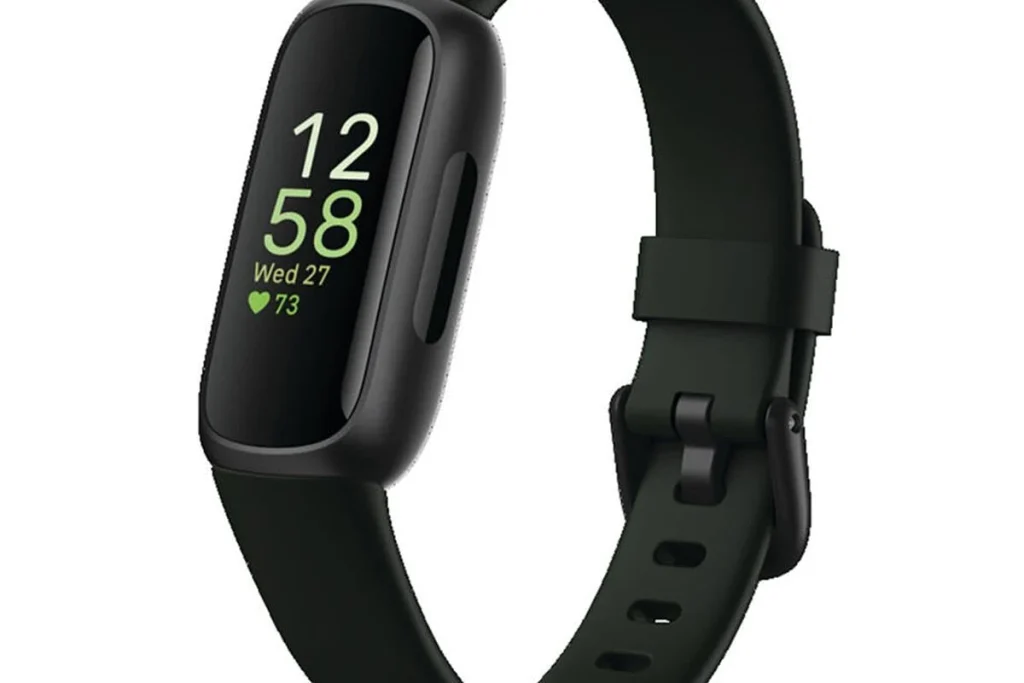
| Signal Sensing | Photodiode PPG & 6-Axis IMU | Captures biometrics and movement acceleration |
| Local Computation | Low-Power Microcontroller | Filters raw motion noise and computes pulse/SpO2 |
| Wireless Output | BLE 5.3 Transceiver Module | Transmits encrypted health data to mobile app |
Sensors, Connectivity, and Mobile App Integration
Fitness wearables depend on photoplethysmography (PPG) optical sensors to measure heart rate and blood oxygen (SpO2), paired with 6-axis inertial measurement units (IMUs) for step and sleep tracking. Data streams over BLE 5.3 to iOS and Android applications, where algorithms translate raw sensor signals into wellness metrics. Exploring wearable electronics ideas requires precise hardware-level signal filtering to remove motion artifacts.
User Comfort, Battery Life, and Durability
Wearables demand biocompatible materials compliant with ISO 10993 standards. Housings utilize lightweight anodized aluminum or medical-grade polycarbonate. Power management integrated circuits (PMICs) must draw under 2 microamps in deep sleep, squeezing 5 to 10 days of operational life from tiny 100mAh lithium-polymer pouch cells.
Prototype and Testing Requirements
During consumer electronics prototyping, engineers utilize optical test rigs to verify photodiode performance through diverse skin tones. Thermal cycling, accelerated sweat corrosion testing, drop tests onto concrete, and electrostatic discharge (ESD) testing up to 15kV are mandatory steps before tooling release.
Smart Personal Safety Devices
Connected Safety Features and Emergency Alerts
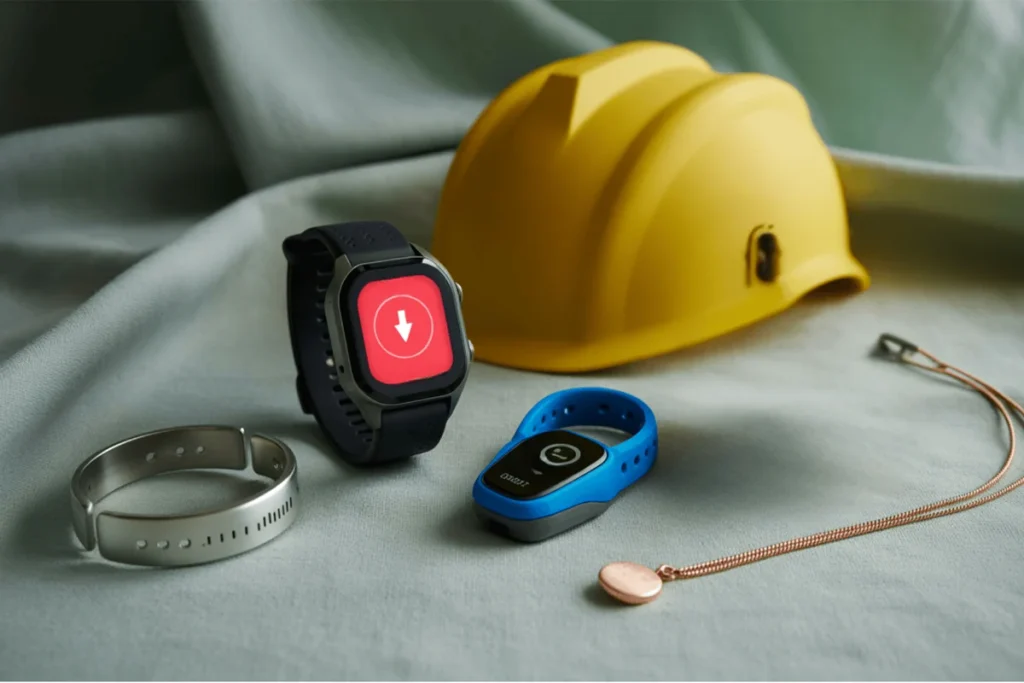
Personal safety alarms combine single-touch distress triggers with audible 110dB piezo sirens and automatic emergency contact notifications. Advanced units include fall-detection algorithms executed on low-power microcontrollers.
Form Factor, Battery, and Wireless Technology
Designed as keychains or wearable pendants, these devices demand tight spatial constraints. They use primary non-rechargeable lithium coin cells (CR2032) optimized for a 2-year standby life, or small rechargeable cells paired with magnetic pogo-pin charging contacts. Connectivity relies on Bluetooth pairing through a mobile phone or standalone cellular connectivity.
Reliability and Compliance Considerations
Because these units operate in crisis scenarios, firmware must run hardware watchdog timers to prevent system freezes. Cellular versions require carrier certifications (AT&T, Verizon, Vodafone) along with PTCRB approval. Antenna efficiency must be verified in free space and next-to-body phantom positions.
Smart Kitchen and Cooking Devices

| Control Pathway | Hardware Component | Primary System Role |
|---|---|---|
| Temperature Feedback | K-Type Thermocouple & High-Temp ADC | Feeds precise thermal metrics to main MCU |
| User Interface | Capacitive Touch Display Panel | Inputs user commands and renders state status |
| Actuation & Power | Dual-Core MCU & Solid State Relay/Triac | Regulates heating elements using zero-cross timing |
| Remote Monitoring | Integrated Wi-Fi Module | Syncs cooking profiles and telemetry with cloud |
IoT Connectivity and Automated Functions
Modern smart kitchen appliances—such as precision sous-vide immersion circulators, smart countertop ovens, and automated coffee brewers—use Wi-Fi connectivity to download cooking profiles and monitor internal temperatures. Integrating innovative electronic products into the kitchen space gives users repeatable culinary outcomes.
Sensors, Controls, and User Interfaces
High-temperature thermocouples or RTD sensors measure temperatures up to 300°C with 0.1°C precision. User interfaces combine capacitive touch panels behind glass with crisp color TFT or OLED screens. Solid-state relays (SSRs) or TRIAC circuits regulate heating elements with zero-crossing control to minimize electromagnetic noise.
Designing for Everyday Consumer Use
Kitchen hardware faces aggressive operational environments involving steam, oil splatters, and thermal shock. PCB assemblies must be protected with conformal coatings. Enclosures require food-grade stainless steel (SUS304) and FDA-compliant, BPA-free plastics like Tritan or PBT.
Portable Charging and Power Management Products
| Power Class | Typical Capacity | Core Technology | Primary Output Format | Target Market |
|---|---|---|---|---|
| Compact Pocket | 5,000 – 10,000 mAh | Li-Polymer / USB-PD 3.0 | 20W – 30W Single Port | Daily Commuters |
| High-Capacity Laptop | 20,000 – 26,800 mAh | 21700 Li-ion / GaN FETs | 65W – 140W Multi-Port | Mobile Professionals |
| Outdoor Power Station | 300Wh – 1,000Wh+ | LiFePO4 / Pure Sine Inverter | AC 110V/230V + 100W USB-C | Camping / Emergency Backup |
Power Banks, Charging Hubs, and Smart Chargers
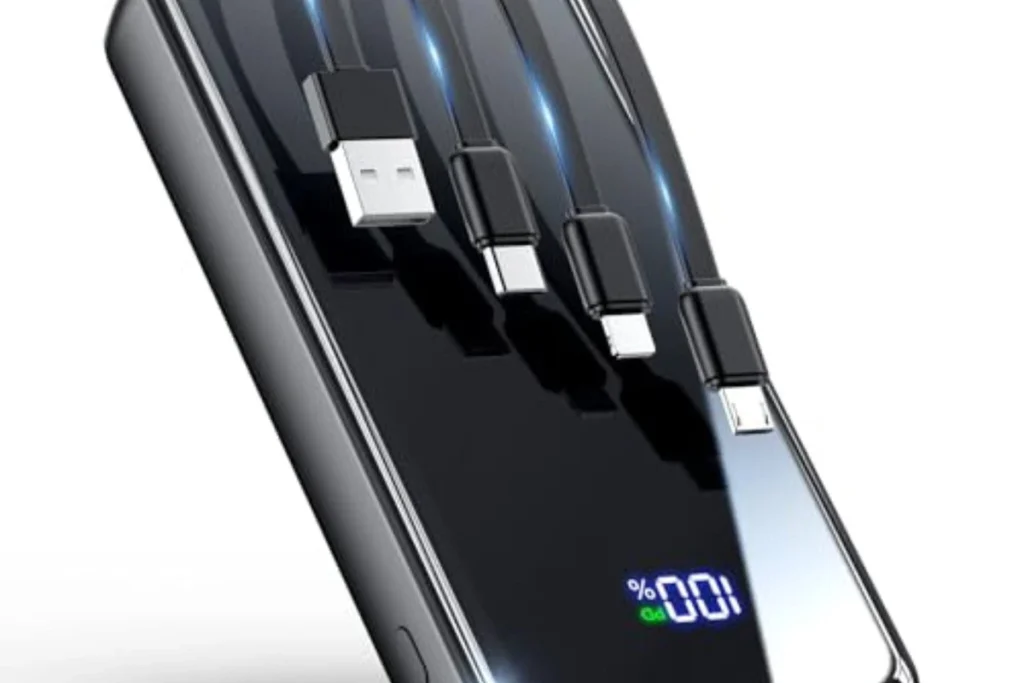
Developing portable electronic products requires high energy conversion efficiency. Modern power management relies on Gallium Nitride (GaN) switching transistors, which operate at higher frequencies than silicon, reducing transformer sizes by up to 50%. USB Power Delivery (USB-PD 3.1) controllers allow dynamic power negotiation up to 240W over a single cable.
Battery Management and Thermal Considerations
Battery management systems (BMS) continuously monitor individual cell voltages, current drain, and internal resistance. High-power density generates heat; engineers must use thermal interface materials (TIMs), aluminum heat sinks, and thermal throttling algorithms to keep internal battery temperatures below 60°C during high-wattage transfers.
Safety and Certification Requirements
Batteries present inherent fire risks if mismanaged. Products must pass UL1642 cell testing, UL2056 power bank safety standards, and UN38.3 transport testing for air freight authorization. Worldwide sale requires CE, FCC, PSE, and KC marks.
Smart Sleep and Wellness Devices

Sensors and Environmental Monitoring
Smart sleep products incorporate non-contact radar sensors (60GHz mmWave), piezo-electric under-mattress strips, ambient light sensors, and microphone arrays. These inputs track breathing frequency, heart rate, movement, ambient room temperature, and air quality without requiring worn straps.
Data Connectivity and Personalization
Onboard microcontrollers process raw sensor signals into sleep-stage estimates (Light, Deep, REM). Bluetooth or Wi-Fi transfers these night summaries to companion mobile applications, which offer tailored recommendations to improve sleep hygiene.
Privacy, Reliability, and Product Safety
Audio sensors require physical mute switches or hardware-level signal isolation to build user trust regarding privacy. Power supply units must maintain low electric noise floor levels to prevent ground loop hums in audio output components.
Smart Audio and Entertainment Devices
| Signal Stage | Audio Subsystem | Signal Processing Role |
|---|---|---|
| Input Capture | MEMS Microphone Array | Feeds ambient noise into DSP for ANC filtering |
| Wireless Processing | Bluetooth Audio SoC | Decodes low-latency LC3 audio streams |
| Analog Conversion | High-Resolution DAC & Class-D Amp | Drives power output with minimal harmonic distortion |
| Acoustic Output | Dynamic Driver Enclosure | Delivers tuned frequency response to ear canal |
Wireless Connectivity and Audio Components
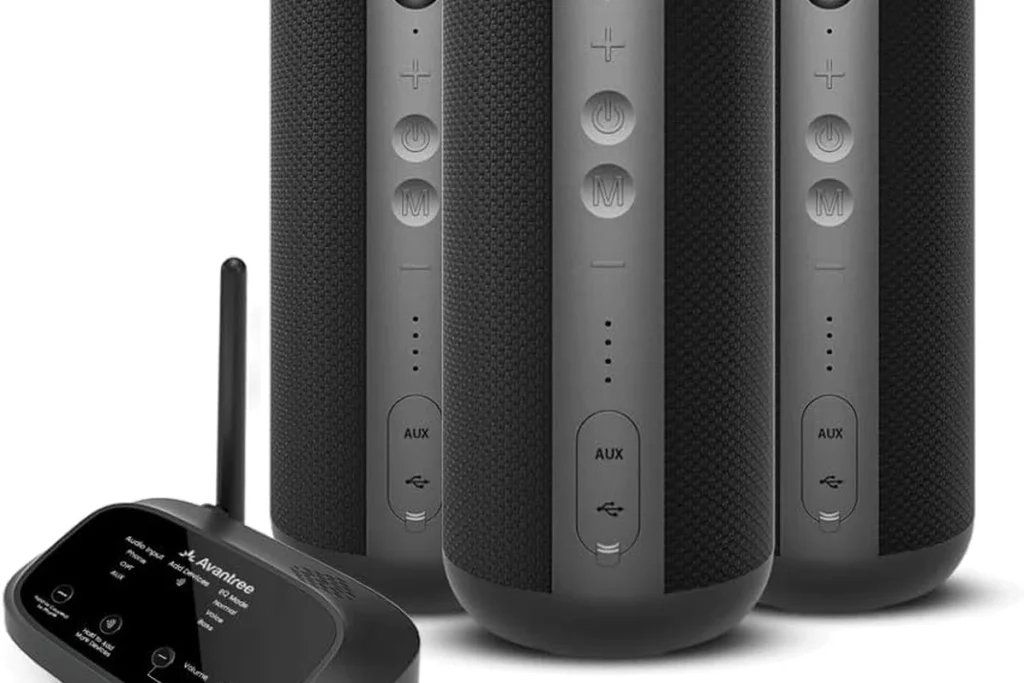
High-end wireless speakers, soundbars, and active noise canceling (ANC) earbuds leverage advanced system-on-chips (SoCs) supporting Bluetooth LE Audio and LC3 codecs. Feedforward and feedback MEMS microphones capture ambient noise, which dedicated digital signal processors (DSPs) cancel out in real time.
Hardware and Software Integration
Acoustic performance depends on tightly coupled hardware and software. Companion apps allow users to adjust custom multi-band equalization profiles, manage multi-room sync, and flash over-the-air (OTA) firmware updates directly to internal flash memory.
Acoustic Design and Manufacturing Considerations
Acoustic chambers require sealed enclosures to prevent air leaks from ruining bass response. Assembly teams use automated glue dispensers to seal speaker driver perimeters, followed by testing inside anechoic chambers on the production line to verify frequency response curves and total harmonic distortion (THD).
Smart Security and Monitoring Devices
Cameras, Sensors, and Real-Time Notifications
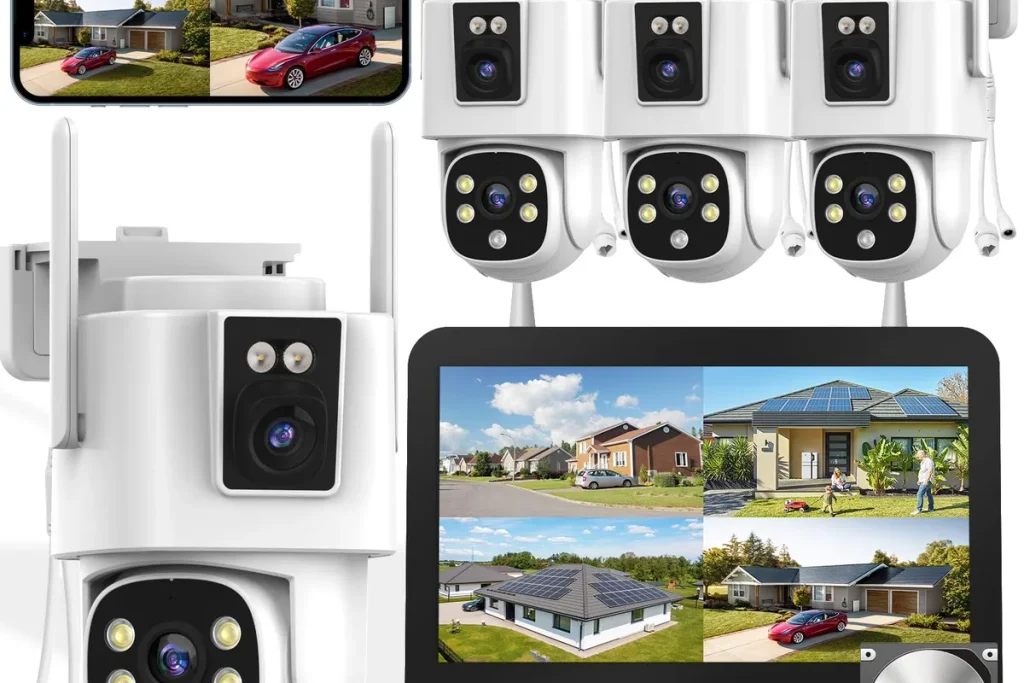
Smart security systems utilize high-definition video sensors (1440p to 4K), passive infrared (PIR) motion detectors, and night-vision infrared LEDs. Low-power edge AI chipsets execute real-time human, vehicle, and package detection onboard, reducing false alerts before sending push notifications.
Cloud, Mobile App, and Connectivity Requirements
Cameras transmit encrypted video streams using RTSP or WebRTC protocols over dual-band Wi-Fi (2.4GHz/5GHz) or PoE (Power over Ethernet). Cloud backends manage subscription video storage, while local fallback storage writes directly to onboard encrypted microSD cards.
Privacy, Cybersecurity, and Compliance
IP cameras face strict regulatory scrutiny regarding cybersecurity. Designs require secure bootloaders, hardware root-of-trust encryption keys stored in secure elements, and compliance with standards such as the US NDAA requirements and EU GDPR privacy rules.
Multi-Function Smart Consumer Devices
| Subsystem Module | Interfaced Hardware Component | Operational Responsibility |
|---|---|---|
| Core Logic | Central Microcontroller (MCU) | Coordinates multi-module power and audio timing |
| Wireless Power | Qi2 Fast Wireless Charging Coil | Negotiates dynamic inductive power transfer |
| Audio Playback | Bluetooth Audio Processing Subsystem | Drives stereo speakers with spatial tuning |
| Visual Lighting | Precision PWM LED Array Driver | Manages color shifts and ambient light sequences |
Combining Multiple Technologies Into One Product
Multi-function hardware—such as a bedside alarm clock featuring Qi2 wireless charging, a Bluetooth speaker, and ambient sunrise lighting—maximizes nightstand utility while reducing total power adapter clutter. Exploring smart electronics product ideas that combine related functions simplifies desk organization for consumers.
Hardware, Firmware, and App Integration
Combining multiple subsystems increases circuit density. The main MCU must orchestrate fast-charging protocols, real-time clock synchronization, spatial audio decoding, and LED PWM dimming without performance drops. Firmware must handle task prioritization cleanly across Real-Time Operating Systems (RTOS).
Balancing Features With Manufacturing Cost
Every added module raises bill-of-materials costs and complicates assembly. Engineering teams must weigh features against target retail pricing. Consolidating discrete functional blocks into single highly-integrated SoCs keeps assembly times down and manufacturing yield rates high.
Related: 15 Smart Home Product Ideas Worth Manufacturing in 2026
How to Evaluate a Consumer Electronics Product Idea Before Manufacturing
| Gateway Stage | Evaluation Focus | Operational Target Metric |
|---|---|---|
| Market Demand | Target Market Size & Pain Points | TAM/SAM validation with real consumer demand |
| DFM Assessment | Tooling & Assembly Feasibility | Standardized components and simple mold designs |
| BOM Calculation | Production Cost Optimization | Target COGS set at 20% to 30% of final MSRP |
| Evaluation Stage | Operational Target |
|---|---|
| 1. Market Demand & Customer | Addressable market over $10M; clear pain point solved. |
| 2. Competitive Differentiation | Clear advantage in performance, price point, or feature combinations. |
| 3. Technical Feasibility | Relies on proven chipsets; low technical execution risk. |
| 4. Manufacturing Complexity | Standard tooling; manageable component sourcing pipelines. |
| 5. Production & Economics | Target unit landed cost equals 20% to 30% of final retail price. |
- Market Demand and Target Customer: Analyze search volume, competitor review trends, and total addressable market size. Ensure the target customer group has a defined pain point and immediate purchase intent.
- Competitive Differentiation: Identify the core advantage—whether it is a 30% smaller enclosure, double the battery life, or an accessible price point.
- Technical Feasibility: Confirm that required functions can be achieved using commercially available components without necessitating unproven scientific breakthroughs.
- Manufacturing Complexity: Determine if the enclosure requires complex multi-slide injection molds or specialized, low-yield assembly processes.
- Expected Production Volume and Unit Economics: Verify that the target landed unit cost (BOM + labor + shipping) equals 20% to 30% of the final retail price (MSRP) at target order volumes.
Consumer Electronics Product Development Process
| Milestone | Phase Focus | Primary Operational Deliverables |
|---|---|---|
| Milestone 1 | Product Architecture | PRD definition, circuit design, and industrial layout |
| Milestone 2 | Engineering Prototyping | Proof-of-Concept, EVT builds, and initial PCB bring-up |
| Milestone 3 | Design & Line Validation | DVT/PVT builds, thermal testing, and assembly testing |
| Milestone 4 | Production Readiness | Steel tooling execution, compliance lab approval, mass run |
Product Requirements and Technical Feasibility
Document every feature, target dimension, battery operational life, wireless standard, operating temperature, and target unit cost in a formal Product Requirements Document (PRD).
Industrial Design and Electronics Engineering
Industrial designers draft exterior ergonomics and surface finishes in CAD tools (SolidWorks, Rhino). Concurrently, electronics engineers design schematics, select principal ICs, and lay out the PCB traces using EDA tools like Altium Designer.
Proof of Concept and Functional Prototype
Build an unrefined benchtop setup using off-the-shelf development boards (ESP32, STM32 kits) and 3D-printed enclosures. This validates that the core circuit logic and software architecture work before ordering custom silicon layouts.
Engineering Validation Testing (EVT)
Engineers order the first run of custom PCBs (typically 10 to 50 units) paired with 3D-printed or soft-tooled enclosures. EVT verifies that the custom electronic design powers up, charges safely, and executes core functional routines without logic failures.
Design Validation Testing (DVT)
DVT units (50 to 200 units) use final production materials and preliminary injection-molded plastic enclosures. These units undergo environmental stress testing, thermal soak tests, drop impact tests, and formal regulatory pre-compliance testing.
Production Validation Testing (PVT)
PVT (100 to 1,000+ units) runs directly on the final mass production assembly line at normal speed. This step tests assembly fixtures, worker training, quality control checkpoints, and automated testing jigs. Units produced during PVT can be sold if they pass final inspections.
Tooling, Certification, and Production Readiness
Cut hardened steel production molds for plastic enclosures. Concurrently, submit final DVT hardware to accredited testing laboratories for regulatory certifications.
Mass Production and Quality Control
Commence volume assembly runs. Quality assurance teams enforce Incoming Quality Control (IQC) on raw parts, In-Process Quality Control (IPQC) along the line, and Outgoing Quality Control (OQC) before boxing.
Related: 30 IoT Product Ideas for Startups to Launch in 2026
Key Technologies Used in Modern Consumer Electronics
| System Component | Hardware Element | Primary Function |
|---|---|---|
| Connectivity | Multi-Standard Wireless Modules | Manages Wi-Fi 6, BLE 5.3, GNSS, and cellular links |
| Telemetry | MEMS & Optical Sensor Suites | Reads acceleration, gas levels, and biometrics |
| Power Subsystem | Lithium Chemistry & PMIC ICs | Handles safe battery charging and dynamic power delivery |
| System Control | Embedded RTOS Microcontroller | Executes firmware routines and secure flash storage |
Building competitive products to manufacture requires understanding the baseline tech stack driving modern hardware:
- IoT and Wireless Connectivity: Low-latency communication stacks allow hardware to seamlessly interact with local networks and mobile devices.
- Bluetooth, Wi-Fi, GPS, and Cellular Technologies: Bluetooth 5.3/LE handles local peripherals, Wi-Fi 6 manages high-bandwidth data transfers, GNSS provides spatial positioning, and LTE-M enables low-power long-range communication.
- Sensors and Embedded Electronics: MEMS accelerometers, gyroscopes, environmental gas sensors, and optical detectors turn real-world metrics into digital data.
- Batteries and Power Management: Advanced Lithium-Polymer and LiFePO4 chemistries paired with smart PMICs deliver optimal runtime and safe thermal profiles.
- Firmware and Mobile App Integration: Robust C/C++ bare-metal or FreeRTOS code drives hardware tasks, synchronizing with mobile apps built on Flutter or React Native frameworks.
Design for Manufacturing (DFM) for Consumer Electronics
| Engineering Domain | Critical DFM Requirement |
|---|---|
| Component Selection | Choose active parts available from multiple global distributors. |
| PCB Assembly (SMT) | Maintain 0.5mm component spacing; add fiducials for optical positioning. |
| Enclosure Mechanics | Apply 1.5° to 2.0° draft angles; maintain uniform wall thickness. |
| Fastening & Joinery | Use standardized screw sizes; add snap fits to lower manual labor time. |
- Selecting Materials and Components: Specify active components stocked by multiple major distributors. Avoid single-source parts with 30-week lead times to protect production schedules against supply chain disruptions.
- PCB and Electronic Assembly Considerations: Design multi-layer PCBs with standard board thickness (1.6mm), uniform copper weight (1oz), and clear fiducials to enable smooth automated Surface Mount Technology (SMT) pick-and-place operation.
- Enclosure Design and Mechanical Integration: Add 1.5° to 2.0° draft angles on plastic housing walls so parts eject cleanly from injection molds. Maintain uniform wall thickness (2.0mm to 2.5mm) to prevent surface sink marks.
- Assembly, Testing, and Quality Requirements: Minimize mechanical screw counts. Use snap-fits and standardized screw heads to shorten line assembly time and lower labor overhead.
- Designing for Scalable Production: Include exposed test pads on the PCB layout. This allows automated bed-of-nails test fixtures to rapidly flash firmware and verify circuit continuity in under 30 seconds per unit.
Consumer Electronics Manufacturing Costs
| Cost Allocation | Component Category | Share of Landed Unit Cost |
|---|---|---|
| Primary Costs | Bill of Materials (BOM – ICs, PCB, Passives, Housing) | 60% |
| Amortized Expenses | Tooling & NRE (Molds and Custom Test Jigs) | 15% |
| Assembly Labor | SMT Machine Operations & Box Build Manual Assembly | 15% |
| Overhead & Logistics | Factory Quality Testing, Scrap Yield, & Shipping Freight | 10% |
What Determines the Cost of an Electronic Product?
Unit landed cost breaks down into four main areas:
- Bill of Materials (BOM): Chips, passive components, connectors, PCB, plastic housing, and packaging.
- Non-Recurring Engineering (NRE): Upfront tooling molds, custom test jigs, and engineering setup fees.
- Assembly Labor: SMT machine time, manual assembly steps, soldering, and packaging operations.
- Yield & Freight: Scrap rates during assembly, quality inspection labor, duty tariffs, and logistics costs.
Related: 50 Innovative Electronic Product Ideas to Manufacture in 2026
Prototype vs. Mass Production Costs
| Cost Parameter | Prototype Phase | Mass Production |
| Sample Volume | 5 – 20 Units | 1,000 – 10,000+ Units |
| Bare PCB Fabrication | $20 – $50 / unit | $1.50 – $4.00 / unit |
| Enclosure Fabrication | $100+ (3D Print) | $1.00 – $3.00 (Molded) |
| SMT Setup / Assembly Labor | $500 flat fee | Included in unit run |
| Total Unit Landed Cost | $150 – $300 / unit | $15 – $35 / unit |
Prototypes carry high unit costs because assembly setups cannot amortize across high volumes. 3D printing enclosure prototypes cost $50 to $150 per part, whereas volume injection molding drops unit housing costs to under $2.00.
Tooling, Components, PCB, Assembly, and Testing
Hardened steel injection molds represent a major upfront capital expense, ranging from $15,000 for simple housings to over $60,000 for complex multi-cavity enclosures. Component costs scale downward as reel quantities increase from 1,000 to 100,000 units.
How Production Volume Affects Unit Cost
| Order Tier | MCU Unit Cost | PCB Cost | Enclosure Unit Cost | Total Estimated COGS |
| 1,000 Units | $3.50 | $3.20 | $4.50 | $28.00 |
| 5,000 Units | $2.40 | $1.80 | $2.10 | $18.50 |
| 50,000 Units | $1.45 | $0.85 | $0.95 | $11.20 |
Higher volume runs yield dramatic cost reductions across every bill-of-materials component.
Compliance and Testing Requirements for Consumer Electronics
Selling hardware legally requires navigating international compliance standards:
| Certification Type | Standard Framework | Regional Market Coverage |
| Electrical Safety | UL 62368-1 / EN 62368-1 | North America & European Union |
| Radio Frequency (RF) | FCC Part 15 / CE RED / TELEC | United States, Europe, and Japan |
| Battery Safety | UN 38.3 / IEC 62133 | Worldwide Air & Ocean Freight Transport |
| Environmental Rules | RoHS / REACH / WEEE | European Union and Global Markets |
Product Safety and Electrical Testing
Mains-powered hardware requires safety certification to prove it will not cause shock or fire under stress. Testing covers standard safety frameworks like UL 62368-1 and IEC 62368-1.
Wireless and Radio-Frequency Certification
Any product intentionally emitting radio frequencies (Wi-Fi, Bluetooth, Cellular) must undergo intentional radiator testing.
- United States: FCC Part 15 subpart C certification.
- European Union: CE RED (Radio Equipment Directive) compliance.
- Japan: TELEC certification.Using pre-certified radio modules cuts testing expenses significantly.
Battery and Transportation Requirements
Products with integrated lithium batteries must pass UN38.3 testing, which subjects units to altitude simulation, thermal shocks, vibration, impact, and forced discharge to ensure air-transport safety.
Regional Compliance Considerations
Environmental rules restrict toxic substances in manufacturing. Products entering Europe must comply with RoHS (Restriction of Hazardous Substances) and REACH directives, requiring lead-free soldering practices across assembly lines.
OEM vs ODM for Consumer Electronics
Selecting the right operating model determines control levels over IP, engineering costs, and launch timelines.
| Operating Model | IP Ownership Structure | Manufacturing Workflow |
| OEM Model | 100% Client Intellectual Property | Client provides complete engineering files for execution |
| ODM Model | Factory Retained Core Platform | Client customizes pre-engineered baseline hardware platforms |
When OEM Manufacturing Makes More Sense
Under Original Equipment Manufacturing (OEM), your team owns the industrial design, mechanical CAD, schematics, and code. You hire a factory purely to execute custom electronic product development, manufacture the parts, and assemble the hardware to your precise drawings. This approach suits brands protecting unique intellectual property.
When ODM Manufacturing Is the Better Option
Original Design Manufacturing (ODM) relies on existing factory-owned designs. The factory provides a fully engineered core product, allowing you to rebrand the housing, adjust packaging, and make minor firmware updates. Working with a consumer electronics ODM manufacturer cuts development time and lowers upfront engineering expenses.
OEM vs ODM: Which Model Fits Your Product?
| Decision Parameter | OEM Model | ODM Model |
| Intellectual Property | 100% Client Owned | Factory Retained |
| Initial Development Time | 9 – 18 Months | 3 – 6 Months |
| Upfront Engineering Costs | High ($50k+) | Low ($5k – $15k) |
| Product Differentiation | Complete | Shared Base Platform |
| Unit Margin Potential | Highest | Moderate |
How to Choose a Consumer Electronics Manufacturing Partner
Selecting an electronics contract manufacturing partner requires thorough technical due diligence:
| Evaluation Area | Factory Requirement | Verification Method |
| Technical Engineering | In-house SMT, EE, ME, and firmware teams | Review engineering portfolio and staff credentials |
| Supply Chain Depth | Direct relationships with authorized distributors | Verify direct component allocation pathways |
| Quality Control | Active ISO 9001 certification and automated testing | Inspect line AOI, ICT, and burn-in test equipment |
| Assembly Capacity | High-speed automated SMT lines | Evaluate hourly component placement capability |
- Engineering and Product Development Capabilities: Verify if the plant maintains in-house electronics and mechanical engineers capable of solving circuit bugs and conducting DFM reviews.
- Prototype-to-Mass-Production Support: Ensure the factory handles low-volume NPI (New Product Introduction) trial runs on the same production line used for mass assembly.
- Component Sourcing and Supply Chain Management: Confirm that the factory buys components directly from authorized distributors to avoid counterfeit chips.
- Quality Assurance and Production Testing: The facility must hold active ISO 9001 certifications and maintain dedicated functional testing stations at the end of every line.
- Certification and Compliance Support: A qualified electronics manufacturing partner guides hardware through FCC, CE, and UL lab testing smoothly.
- Production Capacity and Scalability: Ensure the factory operates modern SMT lines equipped with high-speed chip shooters capable of keeping pace with your projected order growth.
Why Precintl Is an OEM & ODM Consumer Electronics Manufacturing Partner
Precintl delivers end-to-end electronics manufacturing designed for growing consumer hardware brands and established global enterprises.
| Service Subsystem | Technical Capabilities | Client Deliverable |
| Hardware Design | EE, ME, RF tuning, low-power MCU architecture | Complete schematic, gerbers, and CAD assembly |
| SMT & Assembly | In-house high-speed SMT placement lines | Populated PCBAs and mechanical box builds |
| Quality & Testing | AOI, ICT, Hi-Pot, burn-in validation | 100% verified functional hardware |
| Global Logistics | Air, ocean, and customs clearing support | Landed shipments to client warehouses |
From Product Concept to Production
From Product Concept to Production
Precintl bridges the gap between hardware concept sketches and finished consumer products. By integrating design, component procurement, and factory assembly under one team, we eliminate common handoff mistakes between isolated design agencies and offshore factories.
Product Design, Prototyping, and Engineering
Our engineering team supports schematic capture, high-density multi-layer PCB layout, antenna optimization, and mechanical enclosure design. We generate functional 3D-printed and CNC-machined prototypes to validate ergonomics and circuit performance early in the timeline.
| Engineering Service | Technical Delivery |
| Electronic Engineering (EE) | Multi-layer PCB, RF antenna tuning, low-power MCU architecture. |
| Mechanical Engineering (ME) | DFM-ready injection molding designs, IP67/IP68 sealing, thermal management. |
| Firmware & App Engineering | Bare-metal C/C++, FreeRTOS, BLE/Wi-Fi stack integration, mobile SDKs. |
| Manufacturing & Assembly | SMT placement, automated optical inspection (AOI), box-build assembly. |
EVT, DVT, PVT, and Verification Support
We guide hardware through EVT, DVT, and PVT engineering milestones. Our team runs thermal profiling, signal integrity checks, drop tests, and environmental stress screening to catch defects before starting high-volume runs.
Component Sourcing and Supply Chain Management
Precintl leverages global component sourcing networks to secure competitive pricing on microcontrollers, sensors, passive components, and battery cells. We identify drop-in second-source alternatives for hard-to-find active chips, protecting your build schedules against lead-time spikes.
Pilot Production and Mass Manufacturing
Whether building an initial pilot run of 500 units or scaling up to 100,000 units per month, Precintl provides flexible SMT placement and box-build assembly lines configured to match your volume goals.
Quality Control and Production Validation
Quality control underpins every assembly run. We run Automated Optical Inspection (AOI), In-Circuit Testing (ICT), functional bed-of-nails validation, and 100% burn-in testing to keep product defect rates near zero.
Contact our team to discuss your next hardware project.
Frequently Asked Questions
What Are the Best Consumer Electronics Products to Manufacture?
The best products combine stable bill-of-materials costs, straightforward assembly steps, and strong margins. Top product categories include smart home energy monitors, pet activity trackers, wearable health monitors, fast GaN power hubs, and multi-function smart desktop hardware.
What Consumer Electronics Products Are Profitable to Manufacture?
Products delivering retail prices between $60 and $200 while keeping manufacturing costs at 20% to 30% of MSRP yield strong profits. Devices addressing specific consumer pain points—such as smart sleep monitors or specialized audio hardware—command healthy gross margins.
How Much Does It Cost to Develop a Consumer Electronics Product?
Turnkey hardware development costs generally range from $30,000 to over $150,000 depending on product complexity. This budget covers industrial design, PCB layout, firmware programming, prototype runs, injection mold tooling, and regulatory certifications (FCC/CE/UL).
How Long Does Consumer Electronics Product Development Take?
A standard hardware development cycle takes 8 to 14 months from initial PRD approval to mass production shipment. Using pre-engineered ODM platforms can shorten this timeline down to 4 to 6 months.
Can an ODM Manufacturer Help Develop a Product From an Idea?
Yes. An ODM partner provides established base platforms, internal circuit designs, and existing enclosure tooling. This allows you to customize firmware, tweak external plastics, and rebrand an existing core design rapidly without starting from scratch.
Should a Startup Choose OEM or ODM Manufacturing?
Startups seeking fast market entry with low upfront capital should choose ODM manufacturing. Startups developing proprietary hardware technology, novel mechanical interactions, or unique intellectual property should choose OEM manufacturing to maintain full ownership of their engineering design assets.
What Certifications Are Required for Consumer Electronics?
Most regions require EMC and safety compliance:
- United States: FCC part 15 certification and UL safety standards.
- European Union: CE marking (covering RED, EMC, LVD, and RoHS compliance).
- Global Shipments: UN38.3 transport safety certification for integrated lithium batteries.