Looking for high-strength custom metal components? Learn how drop forging works, process types, materials, costs, and design considerations. Partner with Precintl for turnkey OEM/ODM solutions—request a quote today!
What Is Drop Forging?
Drop Forging Definition
Drop forging is a specialized metalworking process where compressive force—delivered by a falling hammer or press—shapes heated metal stock between custom dies. Known for producing dense drop forged steel and high-integrity hardware, this technique aligns the metal’s internal grain structure with the shape of the part, yielding mechanical properties far superior to cast or machined alternatives.
How Drop Forging Shapes Metal Components
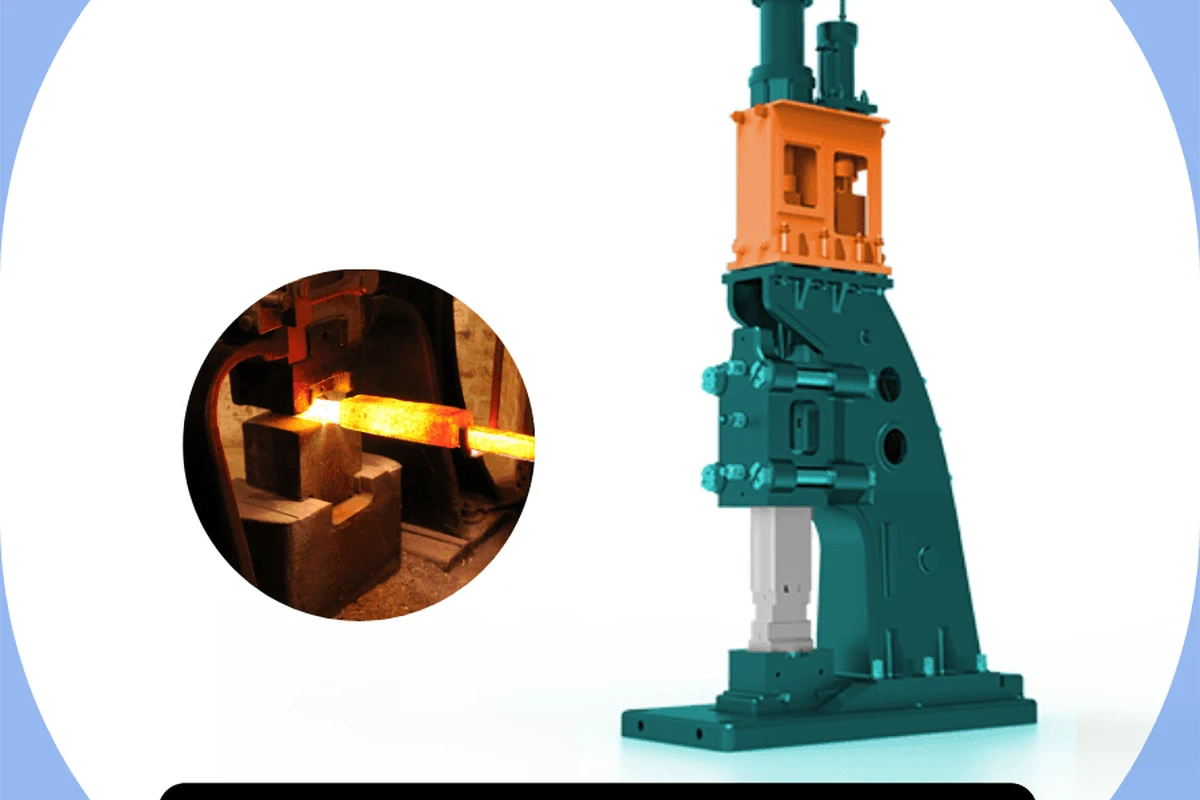
The fundamental principle relies on repeated impact or high pressure. A heated metal billet is placed onto a lower stationary die. An upper die, attached to a heavy ram, drops onto the metal. Under extreme pressure, the metal deforms, flowing into the precise contours of the die cavity. Excess material squeezes out along the perimeter as “flash,” ensuring the internal die volume fills completely without voids.
Drop Forging vs Other Metal Forming Processes
While machining removes material and casting pours liquid metal into molds, drop forging plasticizes solid metal without melting it. Compared to basic open bending or rolling, drop forging process engineering forces metal into complex 3D shapes while refining its internal grain structure.
Why Drop Forging Is Used for High-Strength Components
Forging forces the original continuous grain flow of the raw bar stock to follow the contours of the finished part. This eliminated continuous grain boundary line increases fatigue life, tensile strength, and impact resistance. When safety, structural load, or catastrophic failure prevention is priority, high-stress drop forged components are specified across automotive, aerospace, and heavy equipment industries.
Related: EMS Electronic Manufacturing Explained: From Design to Mass Production (2026)
How Does the Drop Forging Process Work?
Engineering Review and Part Design
The manufacturing sequence begins with Design for Manufacturability (DFM). Engineers review the component CAD file to determine parting line locations, draft angles, radii, and expected shrinkage. Precintl works directly with OEM clients during this stage to refine part geometry, preventing costly tool redesigns later.
Material and Billet Preparation
Raw metal bars are inspected, cut into targeted billet sizes by weight, and surface-cleaned to eliminate scale or contaminants. Accurate volumetric sizing prevents under-filling the die cavity or generating excessive flash.
Heating the Forging Material
Billets pass through induction furnaces or gas-fired heaters to reach their precise plastic deformation temperature. For steel alloys, temperatures range between 1,100°C and 1,250°C. Controlled heating ensures uniform thermal penetration across the entire billet core.
Die Setup and Preforming
Upper and lower dies made from hardened tool steel are aligned on the forging equipment. Before final shaping, the heated billet often undergoes preforming steps—such as edging, fullering, or blocker forging—to distribute mass where the main cavity needs it most.
Hammer or Press Forging
The preformed billet enters the main impression cavity. High-energy blows from a drop hammer or steady tonnage from a press force the hot metal into every recess of the die cavity.
Trimming and Flash Removal
Once forged, the component passes to a trimming press where specialized punch dies shear off the excess circumferential flash, leaving a clean outer profile.
Heat Treatment and Mechanical Property Control
Parts undergo controlled heat treatments—such as normalizing, quenching, and tempering—to relieve internal stresses, homogenize microstructures, and achieve targeted tensile and hardness specifications.
CNC Machining and Secondary Operations
To achieve tight dimensional tolerances or clean mating surfaces, forged metal parts pass through precision CNC milling, turning, drilling, and surface grinding operations.
Final Inspection and Quality Verification
Finished components undergo comprehensive quality control checks including dimensional verification via CMM, non-destructive testing (NDT), and metallurgical testing before shipment.
Types of Drop Forging
Open-Die Forging
Also known as smith forging, this method deforms metal between flat or simple-shaped dies that do not completely enclose the workpiece. It excels at producing massive structural components, short production runs, or preliminary preforms.
Closed-Die Forging
Often termed impression die forging, closed die drop forging completely encloses the hot metal inside matching upper and lower die impressions. This process yields tight dimensional tolerances, complex geometries, and minimal material waste.
Drop Hammer Forging
Drop hammer forging utilizes kinetic energy generated by gravity, steam, or pneumatic force. The hammer strikes rapid, repeatable impacts against the metal stock, making it ideal for thin sections requiring fast energy transfer.
Press Forging
Unlike rapid hammer impacts, press forging applies slow, continuous squeezing pressure using hydraulic or mechanical drives. The force penetrates deep into the core of thick parts, ensuring uniform deformation throughout large cross-sections.
Hot, Warm and Cold Forging
- Hot Drop Forging: Conducted above the metal’s recrystallization temperature (1,100°C+ for steel). Reduces yield strength for maximum flow capability.
- Warm Forging: Performed between 650°C and 1,000°C. Balances lower scale formation with moderate formability.
- Cold Forging: Performed at room temperature. Delivers exceptional surface finishes and tight tolerances but requires significantly higher tonnage.
Materials Used in Drop Forging
Carbon Steel
Standard carbon steels (e.g., 1045, 1020) provide an economical balance of strength, machinability, and heat-treat response. Common in hand tools, structural brackets, and automotive links.
Alloy Steel
Alloy grades (e.g., 4140, 4340, 8620) incorporate chromium, molybdenum, and nickel to elevate hardenability, toughness, and wear resistance under cyclical shock loads.
Stainless Steel
Austenitic (304, 316) and Martensitic (410, 420) stainless steel alloys deliver critical corrosion resistance alongside high mechanical strength, serving valve bodies, marine hardware, and food equipment.
Aluminum Alloys
Lightweight alloys (e.g., 6061, 7075) offer exceptional strength-to-weight ratios. They dominate aerospace structural fittings, automotive control arms, and high-performance racing applications.
Titanium and Specialty Alloys
Titanium (Grade 5 / Ti-6Al-4V) and nickel superalloys handle extreme thermal stress and harsh corrosive environments across aerospace turbines, medical implants, and offshore oil exploration.
How to Select the Right Forging Material
| Material Category | Key Properties | Common Applications | Tensile Strength Range |
| Carbon Steel | Cost-effective, versatile, easy to machine | Brackets, hardware, hand tools | 400 – 700 MPa |
| Alloy Steel | High fatigue resistance, high hardenability | Gears, crankshafts, connecting rods | 750 – 1200 MPa |
| Stainless Steel | Corrosion resistant, strong at elevated temps | Valves, pump housings, marine fittings | 500 – 950 MPa |
| Aluminum (7075) | High strength-to-weight, low density | Aerospace frames, arms, knuckles | 450 – 570 MPa |
| Titanium Alloys | Bio-compatible, heat/corrosion resistant | Turbine blades, drill string tools | 900 – 1200 MPa |
What Are the Benefits of Drop Forging?
High Strength and Structural Integrity
Compressive force eliminates internal gas pockets, voids, and porosity commonly found in cast metal, yielding homogeneous, dense internal microstructures.
Improved Fatigue Resistance
By orienting the internal grain alignment along the principal stress directions of the part, forged components withstand millions of cyclic load shocks without initiating micro-fractures.
Favorable Grain Flow
Unlike CNC machining—which cuts through original grain lines and creates structural weak points—metal forging process dynamics force grains to flow naturally around corners and contours.
Consistent Production Quality
Die cavities enforce strict geometric repeatability across multi-thousand-unit production runs, minimizing dimensional variance from piece to piece.
Suitability for High-Volume Manufacturing
Automated closed die lines produce high-volume batches rapidly once dies are initialized, dramatically driving down unit cost across large runs.
Reduced Material Waste
Because metal is deformed rather than removed, drop forging manufacturing uses stock far more efficiently than hogging parts directly out of solid bar block.
Limitations and Challenges of Drop Forging
Initial Die and Tooling Investment
Custom hardened steel dies require substantial upfront design, EDM sinker machining, and heat treatment capital before the first part is produced.
Geometry and Design Restrictions
Extremely complex internal cavities, deep narrow pockets, and undercuts cannot be formed directly via forging dies without complex multi-piece tooling.
Draft Angles, Fillets and Parting Lines
Parts require tapered draft angles for die extraction, wide fillets to prevent die cracking, and acceptable parting lines where flash is sheared.
Dimensional Tolerance Requirements
As-forged parts possess wider dimensional tolerances than precision machining due to thermal expansion, scale formation, and die wear over time.
Secondary Machining Requirements
Mating faces, threaded holes, and bearing seats require post-forging CNC milling and turning to reach final engineering print requirements.
Production Volume Considerations
Low-volume production runs (under 500 pieces) struggle to amortize high upfront tooling investments, making machining or 3D printing better choices for low volumes.
Drop Forging Design Considerations for Manufacturability
Designing for Proper Material Flow
Avoid sharp corners that restrict metal flow during impact. Smooth transitions prevent unfilled cold shuts and internal lap defects.
Wall Thickness and Section Transitions
Maintain uniform wall thickness across the component. Abrupt changes from thick to thin cross-sections cause uneven cooling, thermal stresses, and cracking.
Draft Angles and Die Release
Incorporate internal draft angles of 7° to 10° and external draft angles of 3° to 5° to allow smooth part ejection from die cavities.
Fillets, Radii and Stress Concentration
Generous fillet radii reduce stress concentrations on both the forged part and the tool steel die, extending die working life substantially.
Parting Line Placement
Position the die parting line along a natural symmetry plane to balance forging forces, minimize flash, and streamline post-trimming grinding operations.
Machining Allowances and Stock
Add 1.5 mm to 3.0 mm of additional machining stock allowance over critical functional surfaces destined for secondary CNC finishing.
Forging Tolerances and Critical Dimensions
Adhere to standard commercial forging tolerances (such as ISO 3669 or DIN 7526) for non-critical features, reserving tight tolerances solely for machined regions.
Drop Forging vs Other Manufacturing Processes
Drop forging vs casting hinges on structural reliability. Casting pours liquid metal into molds, risking porosity, shrinkage voids, and brittle grains. Forging deforms solid metal, yielding superior ductility, impact resistance, and structural strength.
Evaluating drop forging vs CNC machining comes down to volume and strength. CNC machining excels for prototypes and low volumes without tooling costs. However, machining cuts raw grain lines and wastes massive raw material. Forging aligns grain structures and dramatically cuts unit cost at volume.
Die casting injects molten non-ferrous metals under high pressure, producing intricate thin walls. However, die-cast parts lack the high tensile performance and fatigue durability of forged steel alloys.
Stamping manipulates cold sheet metal into thin-walled shapes. Drop forging shapes solid three-dimensional billets into robust, heavy-duty load-bearing parts.
Which Manufacturing Process Is Right for Your Part?
| Attribute | Drop Forging | Metal Casting | CNC Machining |
| Mechanical Strength | Highest (Continuous grain flow) | Moderate (Porosity risk) | High (Base material strength) |
| Material Utilization | High (Near-net shape) | Very High | Low to Moderate (High scrap rate) |
| Tooling Investment | High upfront | Moderate to High | Low/Zero initial tooling |
| Ideal Production Volume | Medium to High (1,000+ pcs) | Medium to High | Low to Medium (1 – 500 pcs) |
| Geometric Complexity | Moderate | Very High | Extremely High |
Common Drop Forging Applications
Automotive and Transportation Components
Critical auto components like connecting rods, crankshafts, steering knuckles, control arms, and transmission gears rely exclusively on custom drop forging for long-term driver safety.
Industrial Machinery and Equipment
High-torque valve bodies, heavy pump shafts, hydraulic cylinder eyes, and industrial crane hooks require dense forged metal to resist structural failure.
Construction and Agricultural Equipment
Excavator bucket teeth, track links, agricultural tiller tines, and tow hitches handle intense daily abrasive wear and impact forces.
Hand Tools and Hardware
Mechanic wrenches, pliers, hammers, padlocks, and rigging shackles carry “Drop Forged” stamps as an industry-standard indicator of strength.
Aerospace Components
Landing gear struts, engine mount brackets, structural airframe hinges, and turbine blade blanks demand high strength-to-weight ratios.
Oil, Gas and Energy Equipment
High-pressure Christmas tree valve blocks, pipe flanges, drill string connectors, and blowout preventer parts handle high corrosive stresses.
Marine and Heavy-Duty Applications
Propeller shaft couplings, heavy anchor chain links, turnbuckles, and marine engine mounts rely on forged stainless steel to endure saltwater stress.
How Much Does Drop Forging Cost?
Material and Part Weight
Raw material cost directly mirrors the net weight of the part plus flash scrap factor. Carbon steels remain economical, while stainless steel, aluminum, and titanium escalate material input costs.
Die and Tooling Costs
Tooling cost correlates with part scale, geometry complexity, and die material. Simple single-impression dies cost a few thousand dollars, while multi-cavity automated dies cost significantly more.
Part Geometry and Forging Complexity
Complex geometries require multi-stage preform impressions (fullering, edging, blocking) before final coining, increasing die set costs and cycle times.
Production Volume and MOQ
Because tooling setup time is considerable, unit pricing falls dramatically as order volumes scale into thousands of units.
Heat Treatment and Surface Finishing
Normalizing, stress-relieving, shot blasting, electro-plating, or powder coating add incremental per-piece finishing costs.
CNC Machining and Secondary Operations
Precision drilling, thread tapping, and surface milling added post-forging constitute a meaningful portion of the total finished part price.
Quality Inspection and Certification Requirements
Specialized non-destructive testing (ultrasonic testing, magnetic particle inspection, radiography) adds quality control overhead for high-spec industries.
How to Reduce Drop Forging Costs Without Sacrificing Quality
✓ Design generous draft angles and radii to extend die tooling lifespan.
✓ Standardize alloy choices around widely available raw bar sizes.
✓ Minimize unnecessary CNC secondary operations by designing near-net-shape forgings.
✓ Consolidate annual purchase orders to maximize production batch runs.
Drop Forging Quality Control and Inspection
Dimensional Inspection
Coordinate Measuring Machines (CMM), 3D optical laser scanners, and custom go/no-go plug gauges verify as-forged and machined dimensions against engineering drawings.
Material and Mechanical Testing
Spectrochemical analysis verifies incoming raw billet chemistry, while tensile, hardness (Rockwell/Brinell), and Charpy impact testing confirm heat treatment results.
Surface and Visual Inspection
Visual inspection teams check for surface scale, cold shuts, folds, and flash trimming alignment.
Non-Destructive Testing
- Magnetic Particle Inspection (MPI): Detects surface and shallow sub-surface cracks in ferromagnetic materials.
- Ultrasonic Testing (UT): Sends high-frequency sound waves through forgings to identify internal voids or inclusions.
- Dye Penetrant Testing (PT): Reveals non-porous surface cracks on aluminum or stainless forgings.
Traceability and Production Documentation
Comprehensive heat-number tracking ensures complete material test report (MTR) traceability from raw steel mill billets down to individual delivered parts.
Quality Standards and Customer-Specific Requirements
Manufacturing processes operate under certified ISO 9001 and IATF 16949 quality management systems, fulfilling specific PPAP Level 3 submit demands for automotive OEMs.
From Forged Part Design to Mass Production
Product Requirements and Engineering Review
The buyer provides CAD models, material specifications, and duty expectations. Precintl engineers complete a comprehensive DFM audit.
Prototype and Manufacturing Validation
Soft-tooling or high-resolution CNC machining from forged bar stock validates geometric form and fit prior to hard tool cutting.
Tooling Development
Hardened die blocks are CNC milled and sinker EDM processed, followed by manual bench polishing and heat treatment.
Pilot Production
A initial sample batch (typically 20–50 pieces) is forged, trimmed, heat-treated, and fully measured to validate the die cavity.
Process Validation and Quality Approval
Samples undergo dimensional CMM inspection and destructive testing. The client approves the First Article Inspection (FAI) or PPAP submission.
Scalable Mass Production and Supply Chain Management
Full automated mass production launches, backed by scheduled inventory deliveries, secondary finishing, and export logistics handling.
Custom Drop Forging for OEM & ODM Manufacturing
When OEM Buyers Should Consider Drop Forging
OEM buyers should pivot to forging when cast parts suffer high field-failure rates under shock loads, or when CNC machining solid stock generates unsustainable scrap costs.
Learn more about OEM manufacturing and how manufacturers can select the right production approach.
How ODM Engineering Supports Forged Component Development
When clients bring raw product concepts or loose sketch ideas, Precintl’s ODM engineering team develops native 3D CAD files optimized specifically for drop forge manufacturing from day one.
Explore our ODM manufacturing guide to understand how product development and manufacturing can be integrated.
Custom Forging Based on Drawings, CAD Files or Product Concepts
Whether working from STEP files, legacy paper drawings, or physical reference samples, custom tooling fits exact engineering specifications.
For concept-to-production development, see our product design guide .
Combining Forging With CNC Machining and Finishing
As an integrated ODM/OEM supplier, Precintl handles the entire production loop: raw forging, precision CNC finishing, heat treatment, and protective surface coating under one roof.
From Prototype Quantities to Mass Production
Flexible production routing accommodates early-stage low-volume product launches before transitioning seamlessly into full-scale mass production runs.
How to Choose a Drop Forging Manufacturing Partner
Engineering and DFM Capabilities
Select a supplier with in-house engineering capabilities that proactively optimizes your designs for material flow and die longevity.
Tooling and Die Development Experience
A reliable drop forging manufacturer manages tool design, die machining, and die maintenance in-house to protect tooling asset life.
Material and Supplier Management
Your partner must maintain certified steel mill supply chains with full heat-lot material traceability and incoming spectrographic testing.
Manufacturing and Production Capacity
Ensure the facility operates diverse hammer tonnages and mechanical presses to handle both small 0.1 kg fittings and heavy 50 kg structural forgings.
Quality Control and Inspection Systems
Look for ISO 9001 / IATF 16949 certifications along with in-house NDT equipment and CMM inspection capabilities.
Prototyping, Testing and NPI Support
Choose suppliers that offer rapid prototyping, First Article Inspection reports, and dedicated New Product Introduction (NPI) project management.
OEM/ODM and International Supply Chain Capability
Select an experienced exporter capable of managing duty compliance, international freight, and flexible stocking arrangements.
Common Mistakes When Ordering Drop Forged Parts
Choosing the Process Before Reviewing Part Design
Selecting drop forging for parts with extreme internal undercuts without consulting a forging engineer leads to expensive re-designs.
Ignoring Tooling Costs and Production Volume
Failing to calculate annual volume payback against initial die tooling costs can make small-batch forging economically unviable compared to CNC machining.
Specifying Unrealistic Tolerances
Applying tight CNC-style machining tolerances (+/- 0.05 mm) to raw as-forged surfaces drives up scrap rates unnecessarily. Keep tight tolerances restricted to secondary machining steps.
Selecting Materials Without Considering Application Requirements
Over-specifying high-cost exotic alloys where medium carbon steel suffices inflates production budgets unnecessarily.
Overlooking Secondary Machining and Finishing
Forgetting to budget for secondary CNC drilling, face milling, or surface plating leads to unexpected cost overruns later in the project lifecycle.
Focusing Only on Unit Price When Comparing Suppliers
Comparing raw piece price without evaluating tooling longevity, steel quality certification, NDT testing, or shipping logistics risks severe field quality failures.
When Is Drop Forging the Right Manufacturing Choice?
Choose Drop Forging When Strength Is a Priority
When safety-critical components face extreme fatigue, impact, or tensile loads, drop forging provides unmatched structural integrity.
Consider Production Volume and Tooling Economics
Forging becomes extremely cost-effective once production volumes exceed 1,000 to 3,000 units per year, amortizing die costs down to negligible levels per piece.
When CNC Machining or Casting May Be More Suitable
- Choose CNC Machining: For low-volume runs (< 500 pcs), rapid prototypes, or geometries with deep internal chambers.
- Choose Metal Casting: For massive, highly complex hollow components where mechanical shock loads are minimal.
Evaluating the Complete Manufacturing Cost
Always analyze the total cost of ownership: raw material utilization, tooling payback, secondary machining costs, and field reliability savings.
Why Choose Precintl for OEM & ODM Manufacturing?
Engineering Support From Concept to Production
Precintl’s engineering team bridges the gap between initial product designs and scalable manufacturing, offering comprehensive DFM analysis on every quote request.
DFM, Prototyping and New Product Introduction
We validate your concept through computer simulation, 3D printing, and prototype sample machining before cutting hard tool steel dies.
Integrated Manufacturing and Secondary Processes
We streamline your entire procurement chain by providing drop forging, precision CNC machining, heat treatment, and surface coating through a single unified project management team.
Quality Control and Production Verification
Equipped with advanced CMMs, spectro-analyzers, and NDT equipment, our quality assurance systems verify that every batch matches your print specifications precisely.
Supply Chain and Mass Production Support
We manage end-to-end international logistics, flexible stocking programs, and raw material sourcing to ensure reliable long-term supply chain performance.
One Manufacturing Partner From Development to Delivery
By partnering with Precintl, you eliminate vendor fragmentation, lower manufacturing risks, and accelerate product launch schedules. Contact our team today to review your project drawings and receive a detailed OEM/ODM manufacturing quotation.
FAQ’s About Drop Forging
What Is Drop Forging?
Drop forging is a manufacturing process that deforms heated metal stock into shape between upper and lower dies using high-impact force from a drop hammer or press.
How Does the Drop Forging Process Work?
A metal billet is heated to its plastic deformation state, placed into a stationary bottom die, and struck by an upper die attached to a heavy ram. The metal fills the die cavities, excess flash is trimmed away, and the part undergoes heat treatment and secondary CNC machining.
What Materials Can Be Drop Forged?
Common drop forging materials include carbon steel, alloy steel, stainless steel, aluminum alloys, copper alloys, and high-strength titanium.
Is Drop Forging Stronger Than Casting?
Yes. Drop forging reshapes solid metal and aligns its grain structure along the part profile while eliminating internal gas porosity and voids. Casting melts metal and pours it into molds, leaving random grain alignment and potential internal defects.
How Much Does Drop Forging Cost?
Total cost depends on part weight, selected alloy, geometry complexity, total volume, and secondary CNC machining requirements. Upfront custom die tooling generally ranges from $2,000 to $15,000+, but piece costs decrease significantly at higher volumes.
What Production Volume Makes Drop Forging Cost-Effective?
Drop forging typically becomes economically advantageous at annual production volumes starting between 1,000 and 3,000 pieces, allowing the upfront tooling cost to be amortized effectively over the production run.